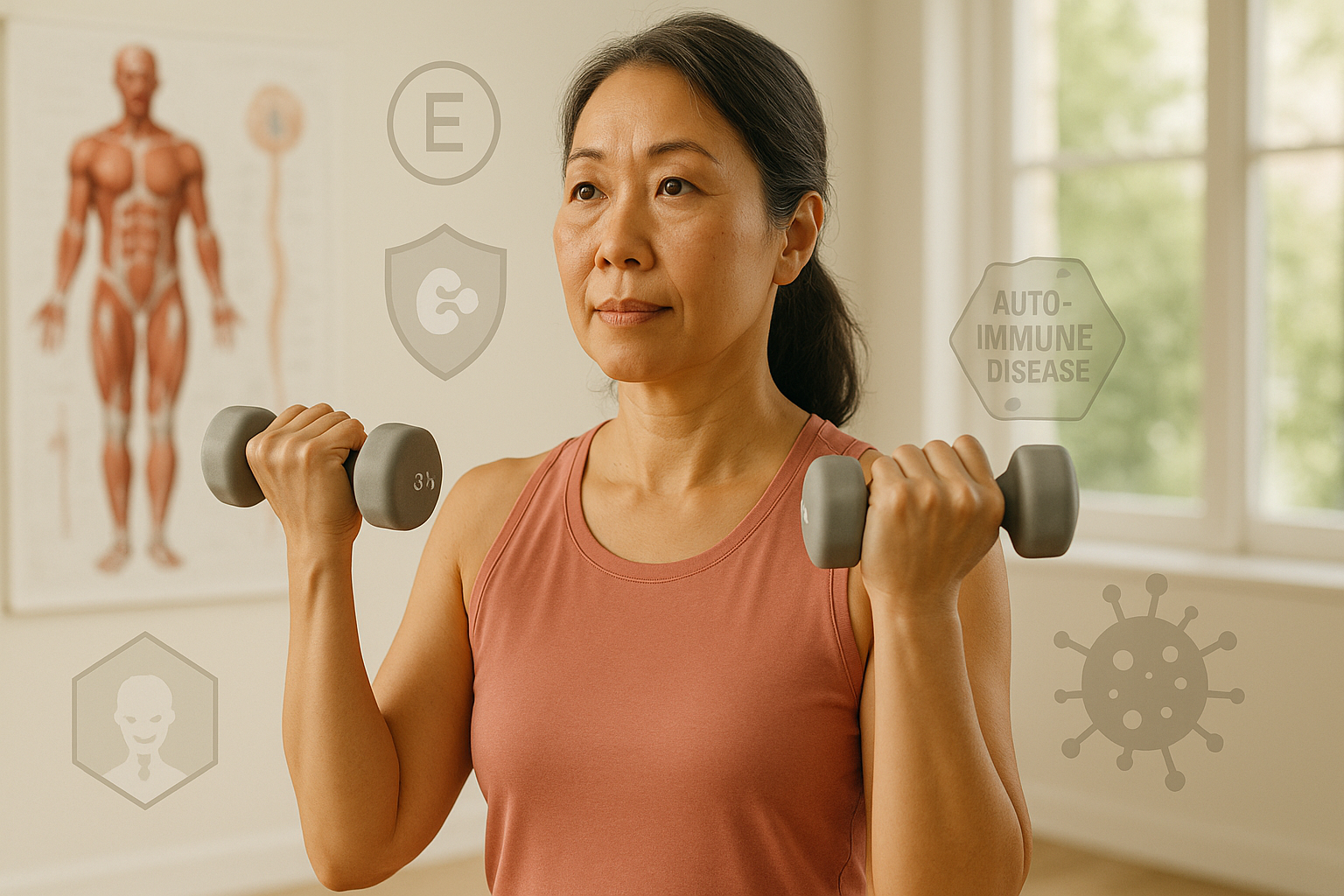
Muscles are not just for strength or appearance. For women, especially during hormonal transitions like menopause, muscle mass plays a critical role in immune regulation, hormone stability, and even the prevention of autoimmune diseases.
This article explores evidence-based connections between strength training, female immunity, and hormonal health, and why women should prioritize resistance exercise as a lifelong strategy for wellness.
1. Strength Training: The Hidden Key to Women’s Immunity
Many women are aware that maintaining muscle is important for aging well, but few realize that muscle tissue acts as an immune-modulating organ. Muscles secrete proteins called myokines, which regulate inflammation and stimulate immune cells like NK cells and T-cells.
Research shows that regular strength training reduces inflammation, boosts immune defense, and can potentially reduce the risk of autoimmune disorders, which are significantly more common in women than men.
Autoimmune diseases such as rheumatoid arthritis, lupus, and thyroid disorders affect women 2–10 times more frequently than men.
Myokines play a vital role in maintaining immune balance. Thus, losing muscle mass—as commonly occurs during menopause—may leave the body vulnerable to chronic inflammation and immune dysregulation.
Strength training also improves blood flow, reduces stress hormones, and supports metabolic health, all of which enhance the immune system.
2. The Link Between Muscle and Autoimmune Disease
Why are autoimmune diseases more prevalent in women? While genetics and hormones play a role, muscle mass is often overlooked.
Women with sarcopenia (age-related muscle loss) show higher risks of immune disorders. Muscle loss contributes to:
- Poor metabolism
- Elevated chronic inflammation markers
- Increased insulin resistance
All of these factors contribute to immune imbalances that can trigger or worsen autoimmune diseases.
Many women with autoimmune conditions are unaware of the protective effect of muscle, leading to faster muscle loss and worsening disease symptoms.
Without resistance exercise, a dangerous cycle begins:
Less movement → More muscle loss → Weaker immunity → Worse symptoms → Even less movement
The solution?
Implementing tailored strength routines for women with or without existing autoimmune issues.
Recommended activities:
- Physiotherapy-guided resistance exercises
- Low-impact weight training
- Pilates and functional bodyweight training
While strength training may not "cure" autoimmune diseases, it can improve immune balance, reduce symptom severity, and enhance quality of life.
3. Hormones and Muscles: A Crucial Relationship
Throughout a woman’s life, estrogen plays a central role in maintaining muscle, bone, and immune health.
During adolescence, estrogen helps balance muscle and fat development. But post-menopause, estrogen levels drop dramatically—leading to:
- Accelerated muscle loss
- Increased inflammation
- Disrupted immune regulation
Estrogen supports muscle strength, suppresses inflammation, and enhances protein synthesis in muscle tissue.
This hormonal drop explains why many women develop autoimmune conditions like rheumatoid arthritis or thyroid disorders after menopause.
Why strength training matters here:
- Promotes muscle maintenance in the absence of estrogen
- Lowers inflammatory markers naturally
- Supports hormonal homeostasis
- Helps manage fatigue, sleep problems, and mood swings
Estrogen can’t be fully replaced, but resistance training acts as a natural buffer against its decline.
Unlike cardio or stretching, only strength-based workouts significantly improve bone density and long-term hormonal balance.
Summary: Muscle Is Medicine for Women
Women’s health isn’t just about diet or weight—it’s about the delicate balance of muscle, immunity, and hormones.
Strength training offers more than toned arms or better posture. It:
- Lowers risk of autoimmune diseases
- Enhances immune system regulation
- Supports hormonal health during menopause
- Improves overall resilience
From your 20s to post-menopause, consistent strength training is a lifelong tool for women's wellness.
So instead of viewing exercise as something you “should” do—start seeing it as a scientifically backed strategy to protect your body.
Even small steps—like 15 minutes of resistance bands or light dumbbell work—can lead to lasting health benefits.
References
- Pedersen, B. K., & Febbraio, M. A. (2012). Muscles, exercise and obesity: skeletal muscle as a secretory organ. Nature Reviews Endocrinology, 8(8), 457–465.
- Simpson, R. J., et al. (2020). Exercise and the regulation of immune functions. Progress in Molecular Biology and Translational Science, 135, 355–380.
- Fairweather, D., & Rose, N. R. (2004). Women and autoimmune diseases. Emerging Infectious Diseases, 10(11), 2005–2011.
- Hoffman-Goetz, L., & Pedersen, B. K. (1994). Exercise and the immune system: a model of the stress response? Immunology Today, 15(8), 382–387.
- Booth, F. W., & Laye, M. J. (2009). Lack of exercise is a major cause of chronic diseases. Comprehensive Physiology, 2(2), 1143–1211.